
When I first started running ads for a small brand out of Oakland a few years back, I did what most people do. I saw the blue “Boost post” button, figured it was advertising, and clicked it. Twenty dollars later I had a hundred extra likes and zero new customers. That was my introduction to Meta ads vs boosted posts, and it was an expensive one.
It took me longer than I’d like to admit to realize I hadn’t run an ad. I’d just paid Meta to show my post to more people. Those are two very different things.
What a boosted post actually is
Boosting a post is simple by design. You take an existing post from your Facebook or Instagram page, pick a budget, choose a rough audience , age range, location, a few interests, set a duration, and hit Go. Meta’s own page on what boosted posts are is worth reading, because it describes the limits plainly.

That’s pretty much it. No Ads Manager. No campaign structure. No pixel events. You’re essentially saying “more people should see this” and Meta figures out the rest.
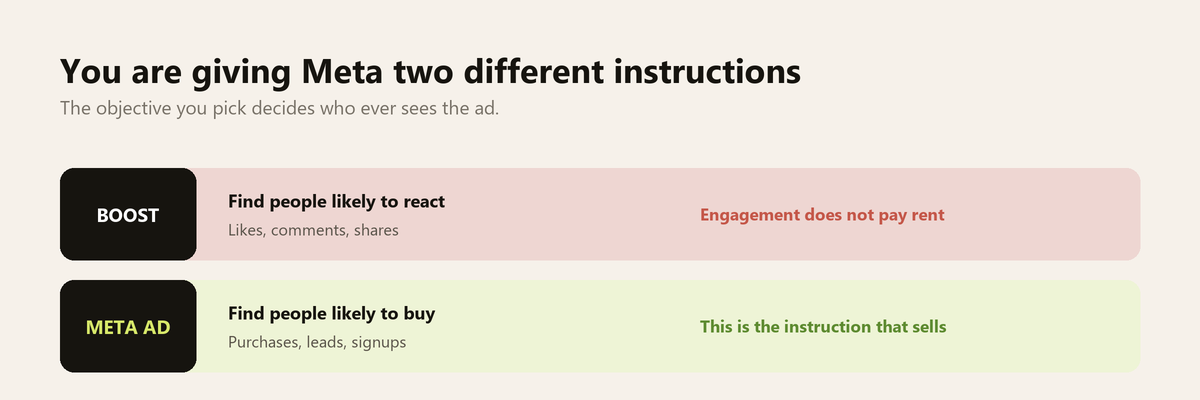
The problem is what Meta optimizes for when you boost. In most cases it chases engagement, likes, comments, shares, maybe profile visits. That sounds good on paper but engagement doesn’t pay rent. If you’re trying to sell something or collect emails, boosting is pointing the algorithm in the wrong direction from the start.
What running actual Meta ads looks like
Everything you build inside Ads Manager is a Meta ad. That’s where the real system lives.
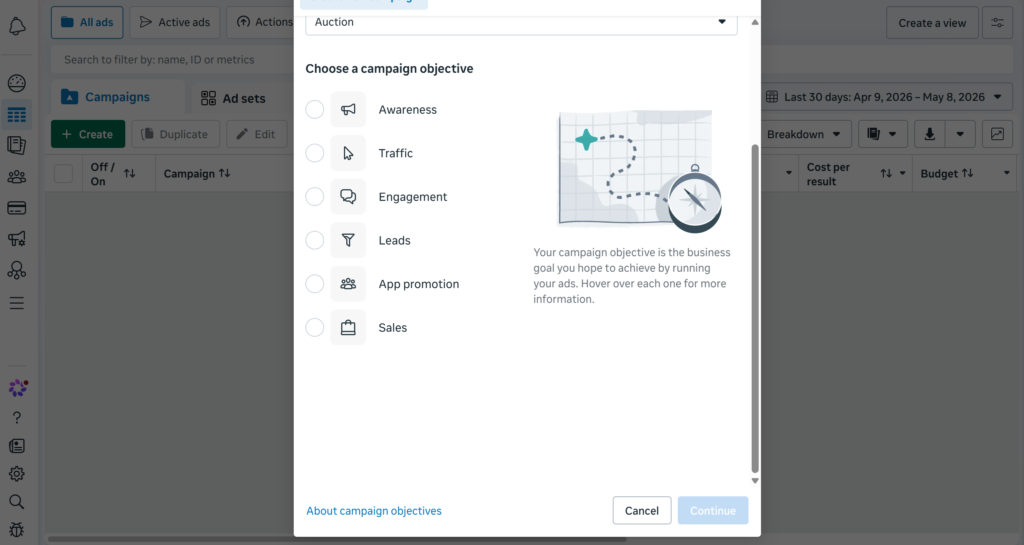
The first thing you pick is your campaign objective. Do you want purchases? Leads? Video views? Traffic to your site? Each objective tells Meta’s algorithm what to optimize for. When you choose “sales” and connect it to a purchase event on your website, Meta goes looking for people who are most likely to buy from you. That’s a fundamentally different job than finding people who’ll like a post.
From there you control targeting at a much deeper level. Custom audiences built from your website visitors. Lookalike audiences modeled on your existing buyers. Broad targeting that lets Meta’s machine learning find buyers you wouldn’t have thought to target yourself. You test multiple creative variations simultaneously. You get detailed reporting that tells you what’s working and why.
The whole structure is built to learn. Every click, every purchase, every scroll-past is a data point Meta uses to get better at delivering your ads to the right person.
Meta ads vs boosted posts: the real gap
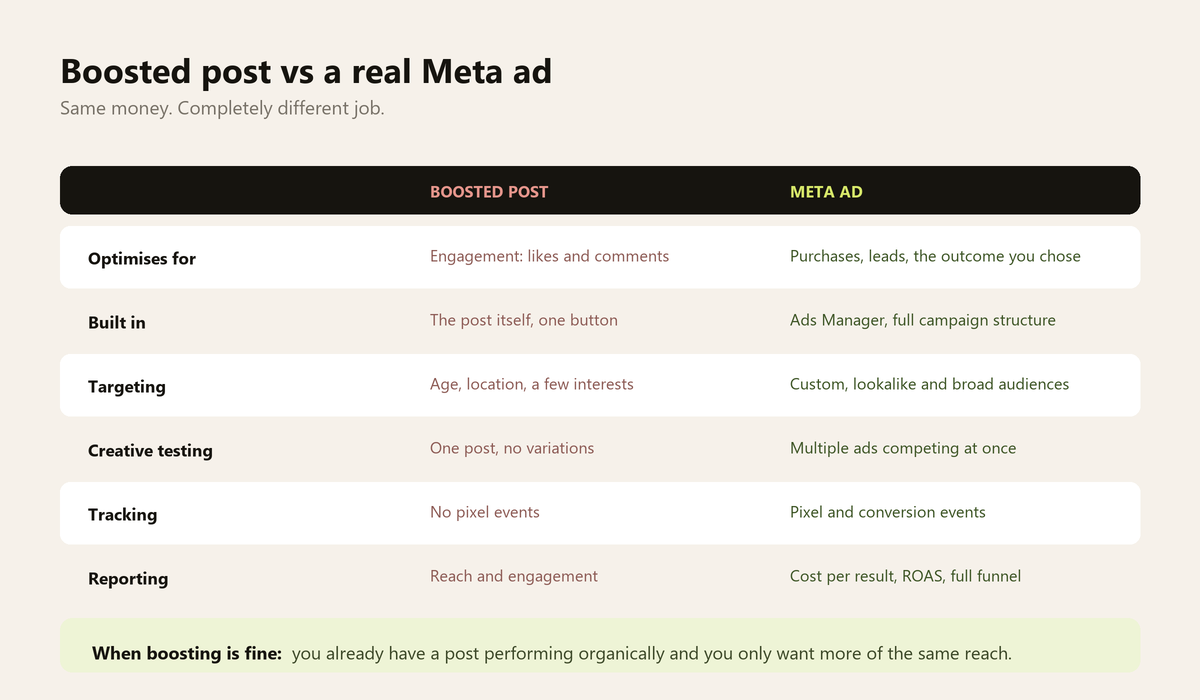
The differences matter more than most people think. Meta publishes its own comparison of the difference between boosted posts and Meta ads, and it lines up with what you see in practice.
Optimization objective : a boosted post almost always optimizes for engagement. An Ads Manager campaign can optimize for purchases, leads, add-to-carts, video views, landing page visits, messages. You’re giving the algorithm a completely different job to do.
The pixel connection : this is probably the biggest one. When you run campaigns through Ads Manager and your Meta pixel is installed correctly, every action someone takes on your website feeds back into the system. Meta learns who converts, builds a profile of that person, and finds more like them. Boosting a post barely touches this feedback loop.
Targeting depth : boosted posts give you surface-level controls. Ads Manager gives you custom audiences, lookalikes, detailed behavioral targeting, retargeting people who’ve already visited your site or watched your videos. That’s night and day.
Creative testing : in Ads Manager you can run multiple versions of an ad simultaneously. Different hooks. Different visuals. Different offers. You find out what actually works instead of guessing. With a boost you’re stuck with whatever post you already published.
Reporting : the data you get from Ads Manager is in a different league. Cost per result, click-through rate, cost per purchase, frequency, reach vs impressions. You have enough to make real decisions. Boost reports give you a few basic numbers and not much else.
So when does boosting make sense
Honestly, not often if your goal is revenue. But there are a couple of situations where it’s not the worst move.
If a post is performing really well organically, lots of genuine engagement, comments, shares, boosting it can amplify that social proof. Sometimes that’s useful for brand awareness or testing whether a message resonates before you put real money behind it.
For very local businesses trying to get more eyes on an event or a promotion in a small geographic area, boosting can be a quick way to extend reach without a steep learning curve.
But for anything beyond that selling a product, building an email list, scaling a business boosting is just spending money without building anything.
Why this distinction matters more than it seems
Most people who say “Facebook ads don’t work” ran boosts. They put money behind posts, got engagement metrics that meant nothing to their bottom line, and walked away convinced the platform was broken.
The platform isn’t broken. They were using the wrong tool.
Real Meta advertising is a system. It starts with the right account structure, clean tracking, and a clear objective. It gets better over time because every campaign teaches the algorithm something useful. Boosting a post teaches it almost nothing.
If you’ve been boosting and wondering why results feel random, that’s probably why.
Once you understand Meta ads vs boosted posts, the logical next step is getting the actual infrastructure right. And that starts with your business account. Everything else, pixels, ad sets, audiences sits on top of it. If that foundation is shaky, your campaigns will feel it. Setting up Meta Business Manager the right way is where that process begins.